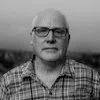
Alex Neve: a lifetime of human rights advocacy, 2025 Massey Lecturer
By Jessie-Lee Wallace*
Alex Neve, an impressive long-time resident of the Glebe, is touring the country this fall for a good reason: to promote peace and justice during a time many would agree is divisive and challenging all of us to be good citizens.
Alex Neve, the 2025 Massey lecturer, has dedicated his life to championing human rights causes both globally and locally.
His upcoming Massey lectures represent the culmination of decades of advocacy work and offer a timely reflection on the state of human rights in today’s challenging global landscape. His new book was written to accompany the lectures and uses the same title, Universal: Renewing Human Rights in a Fractured World. It was released with a book launch at Abbotsford House on September 2.
The Glebe Report recently sat down with Neve to find out more about his journey into human rights advocacy that started when he was a child. After losing his father at the age of eight, he watched his mother, who worked as a dietitian running a hospital kitchen in Calgary, campaign for accessible daycare in Alberta during the early 1970s.
This early experience left a profound impression on young Neve, instilling in him the principle that “if something’s wrong, if something’s not right, if something needs to change, don’t just complain about it, do something.”
His path became clearer during his first year at Dalhousie University Law School in the mid-1980s when he attended a meeting of the Halifax chapter of Amnesty International.
That evening proved transformative as Neve wrote his first letter on behalf of Beatriz, a law student who had been abducted in El Salvador. The experience gave him clarity about his future: he wanted to become an international human rights lawyer, a relatively uncommon career path at that time.
In 1999, Neve was appointed secretary general of Amnesty International Canada, which brought him and his family to Ottawa. During his tenure, he conducted extensive frontline work in conflict zones, including Darfur in Sudan and eastern Chad. The post 9/11 era presented significant challenges as he witnessed what he describes as “a rollback, erosion of very fundamental principles” in the name of security.
Neve was centrally involved in advocacy for Canadians caught in what he calls the “war on terror machinery,” including Maher Arar and Omar Khadr. His work took him to Guantanamo Bay three times to observe proceedings against Khadr. These cases eventually led to institutional and legal reforms in Canada, including new oversight agencies for national security operations.
Currently a professor at the University of Ottawa, teaching in both the Faculty of Law and the Faculty of Social Sciences, Neve continues to engage with pressing human rights issues. His teaching keeps him connected to the next generation of advocates, whom he describes as a source of hope because of their “dedication, curiosity, anger, outrage and imagination.”
The prestigious Massey Lectures offer Neve a platform to address what he sees as our “fractured, heaving, broken world” and to explore whether human rights can provide a way forward.
His lectures, like his book, will begin with an assessment of our current global challenges, from climate crisis to rising hate, mass atrocities and economic inequality. They will also explore the historical foundations of human rights, examine how we have failed to fulfil the promise of universal human rights, celebrate the power of peopledriven movements for change and outline an agenda for moving forward.
For Neve, the most critical aspect of human rights is their universality – the idea that they apply “to everyone, everywhere, anytime, no matter who they are.” He argues that we have never truly embraced universal human rights and that now is the time to “get serious” about doing so.
The Massey Lectures will be delivered in five Canadian cities: Toronto (September 19), Vancouver (September 25), Edmonton (October 1), Happy Valley-Goose Bay (October 15) and Ottawa (October 30) at the National Arts Centre. Neve will also participate in the Ottawa Writers Festival in late October in conversation with Adrian Harewood.
In an effort to get more people involved, his book includes an appendix of resources for taking action on human rights issues. “Silence is not an option,” Neve says. “Inaction is not an option.” He emphasizes “that we all have a role to play in creating a more just world and that it starts in our daily lives, in our homes and neighbourhoods.”
*Jessie-Lee Wallace is a writer, non-profit leader and volunteer who believes in the strength of local community. She lives in the Glebe Annex. This article appeared in the Glebe Report, September 12, 2025